📘 Uso
Para hablar de existencia se usa there más el verbo to be. En este tema lo veremos en pasado, con was o were, y normalmente se traduce como “había” (si quieres verlo en presente, haz clic en There is/are). Usamos there was para singular y there were para plural.
✨ Visual Summary
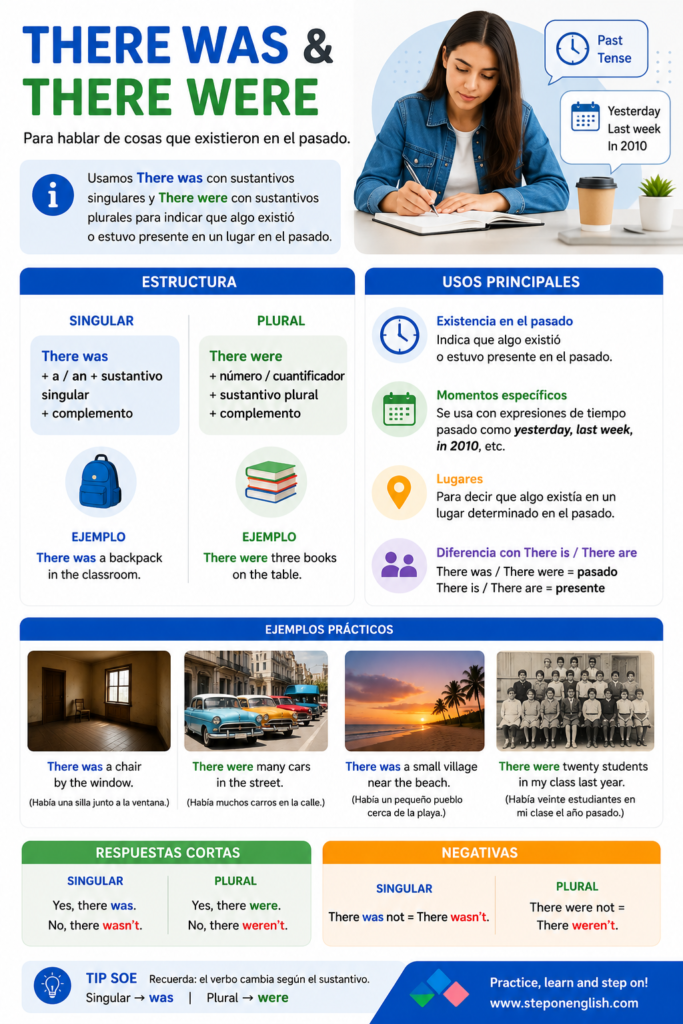
📊 Visual summary generated with AI and reviewed by Step On English.
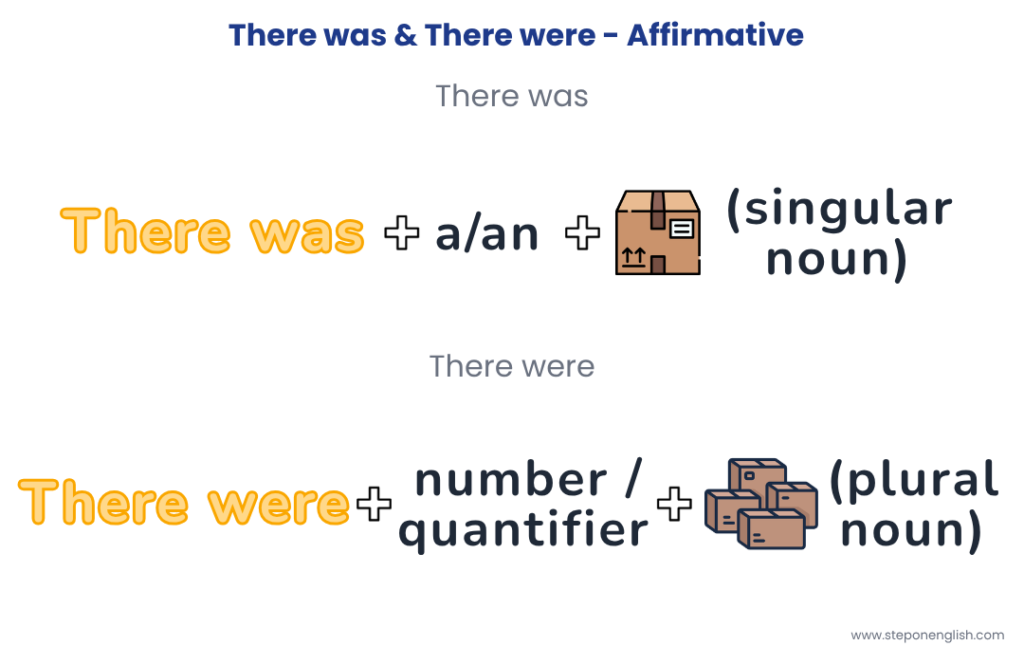
➕ Forma Afirmativa
Esta estructura normalmente se traduce como “había”, ya que describe algo que existía en un momento del pasado.
✨ Examples
There was a restaurant near my house some years ago.
There were two newsstands in the corner last month.
There was an ice cream store in the park when I was a child.
There were two notebooks on the table yesterday morning.
💡 Tip: A veces verás there was/were traducido como “hubo”. Ojo: en español “hubo” es invariable, nunca se dice “hubieron”, sin importar si hablas de una cosa o de mil. En esta entrada usamos “había” porque describe mejor una situación pasada, pero si alguna vez traduces there was/were como “hubo”, recuerda mantenerlo siempre en singular.
⚠️ Common Errors
Con sustantivos en plural siempre usamos were, sin importar el número que menciones.
There was two books on the table. ❌
There were two books on the table. ✅
Confundir There con their. There indica existencia; their es un posesivo.
Their were a lot of people at the mall. ❌
There were a lot of people at the mall. ✅
➖ Forma Negativa
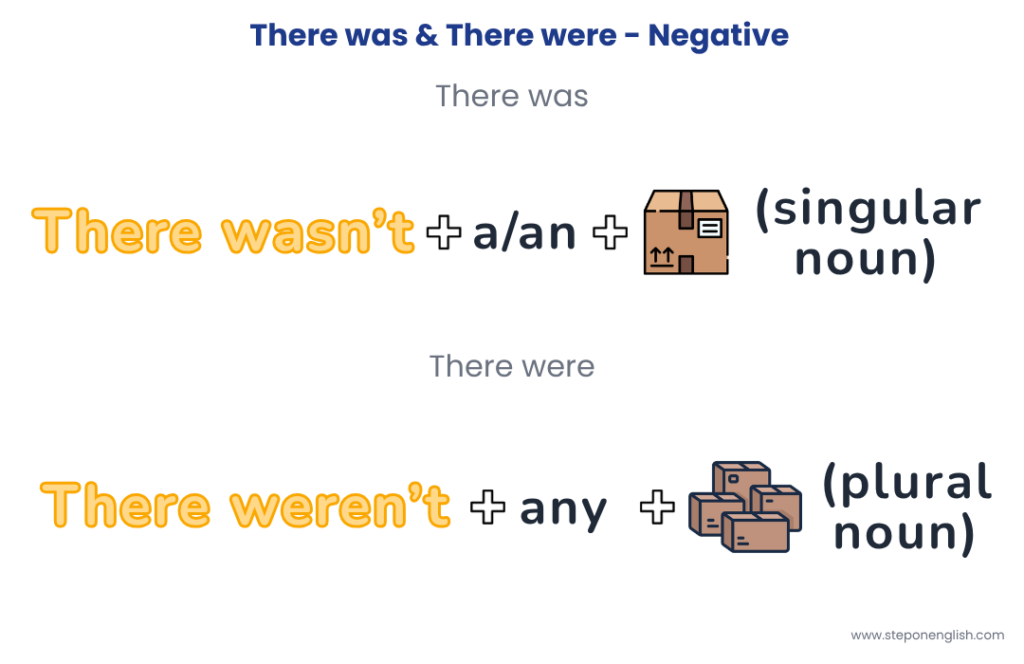
En esta forma usamos la forma negativa del verbo to be wasn’t y weren’t:
✨ Examples
There wasn’t a pencil in my pencil case.
There weren’t any books in my bedroom.
There wasn’t a library in my town.
There weren’t any roads to the hill.
⚠️ Common Errors
En negativo usamos any, no some.
There wasn’t some pencils in my case. ❌
There weren’t any pencils in my case. ✅
❓ Forma Interrogativa
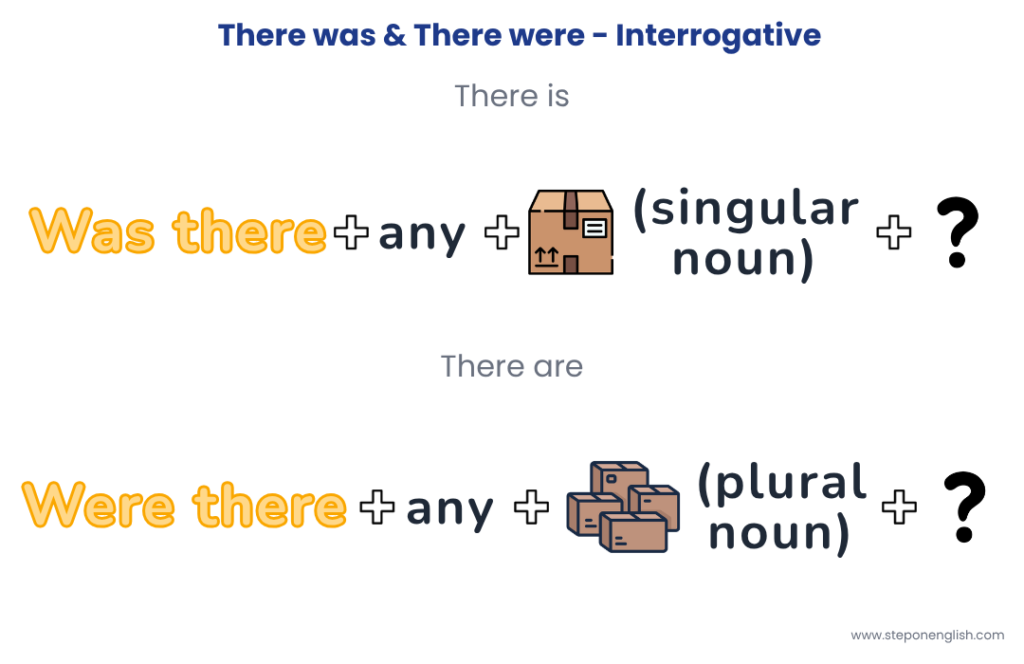
Para hacer preguntas, solo basta con cambiar el orden de was y were, quedando al inicio de la pregunta.
✨ Examples
Was there any monument on that street?
Were there any trees in the park?
Was there any road to the city?
Were there a lot of students in your classroom?
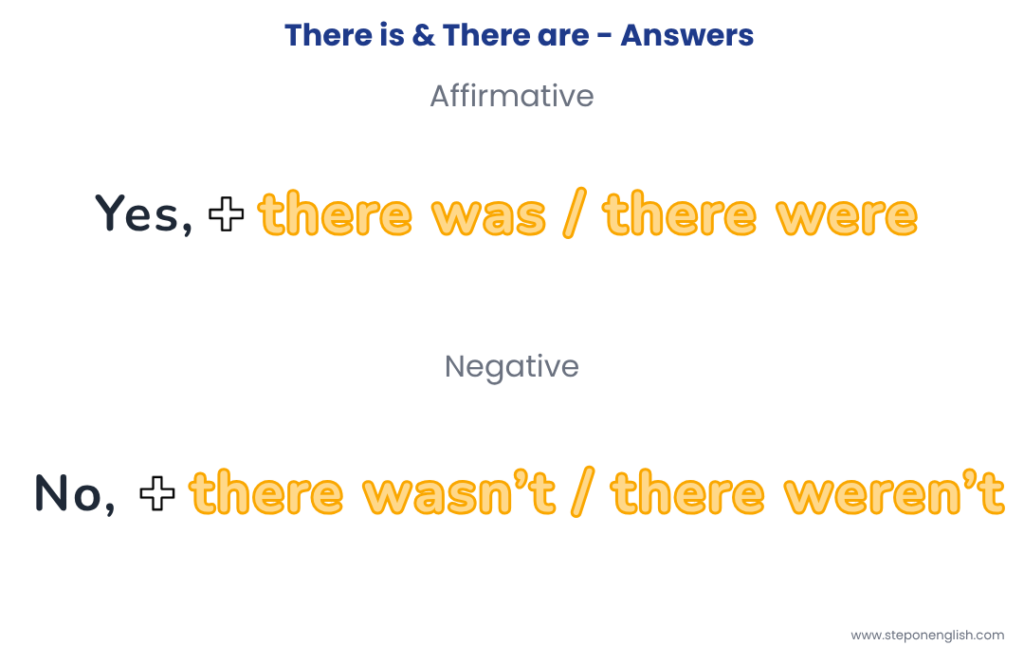
Respuestas con there was y there were
Respondemos usando las respuestas cortas, en caso afirmativo, There was / There were y en caso negativo There wasn’t / There weren’t
🧮 Cuantificadores (Quantifiers)
Hay palabras que utilizaremos para indicar cantidades en estas oraciones, en singular solo basta usar a/an o si precisamos especificar cantidad usando one.
En plural podemos indicar el número de objetos o alguno de los siguientes cuantificadores:
There was some milk.
There was a lot of food.
En forma negativa e interrogativa, some cambia a any (en negación significa “ninguno” y en pregunta “algún”). Los demás cuantificadores, como a lot of, se mantienen igual en las tres formas.
🔎 Consideraciones:
Es muy importante que revises que los tres elementos de la oración coincidan en cantidad. Si usas There was, debe acompañarse de a/an y un sustantivo en singular. Si usas There were, debe acompañarse de un número, uno de los cuantificadores mencionados arriba, o un sustantivo en plural. Si quieres reforzar esta misma lógica en presente, revisa la comprobación de there is/are.
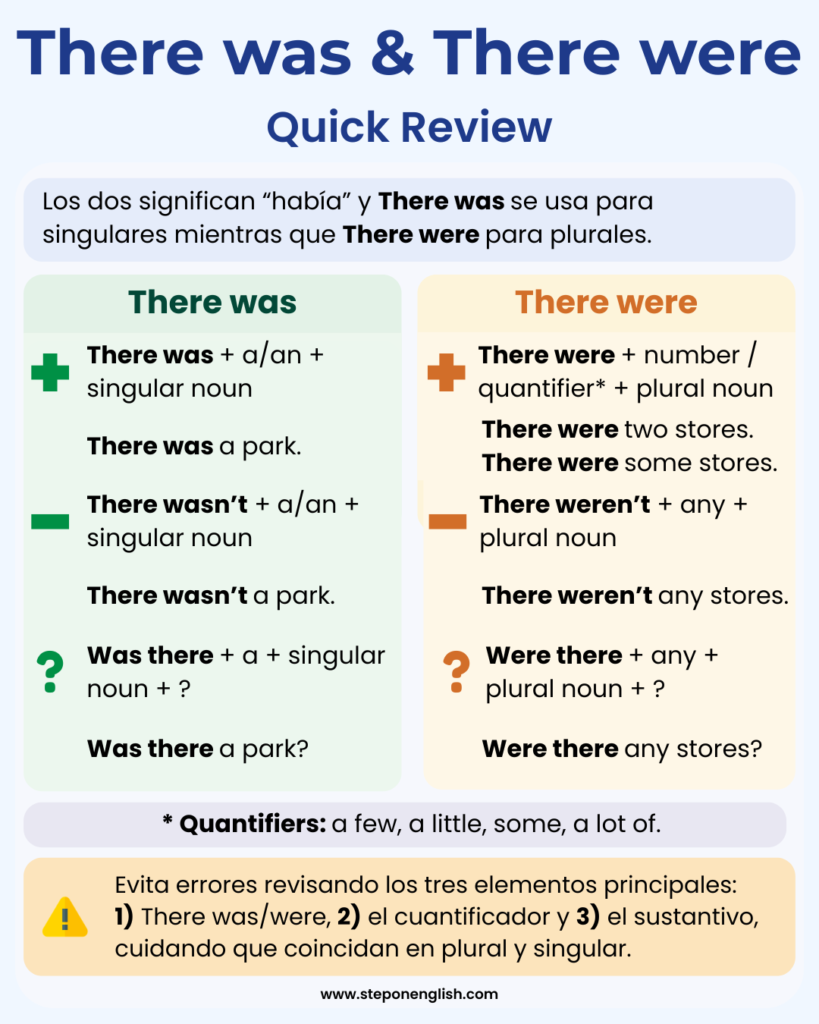
🧠 Quick Review
💬 The Speaking Lab: There was & There were in Real Life!
Escucha y repite las siguientes oraciones, pon atención en las respuestas con números.
📝 Práctica:
Personaliza las respuestas con tus datos y practica con un amigo o compañero.
✔️ Self-Evaluation
- También puedes intentar el Quiz de There was & There were.
Comprueba tus conocimientos.
There was / There were
Choose the correct option.

Next Step
Puedes complementar el uso de there was / there were aprendiendo Simple Past: el tiempo verbal que usarás para hablar de cualquier acción terminada en el pasado, no solo de existencia.
🗂️ Recursos recomendados
- 📖 Revisa el tema de el verbo to be en pasado para entender mejor el uso de was y were.
- 📲 Descarga las infografías del Quick review y Summary de There was y There were.
- 🌐 Explora otros temas de gramática en nuestro índice por áreas y niveles.
📚 References
British Council. (2021). Quantifiers. British Council Learn English. https://learnenglish.britishcouncil.org/es/english-grammar-reference/quantifiers
Swan, M. (2016). Practical English Usage (3rd ed., Version 3.53.260) [Aplicación móvil]. App Store. https://apps.apple.com/us/app/practical-english-usage/id1383662928