
📘 Uso
There is y there are se usan para indicar la existencia de algo y equivalen al “hay” del español. La diferencia es simple: there is va con sustantivos en singular y there are con sustantivos en plural. En español “hay” funciona para ambos casos, así que al escribir en inglés debes cuidar que tres elementos de la oración coincidan en número: 1) there is/are, 2) el cuantificador y 3) el sustantivo. Si los tres son singulares o los tres son plurales, la oración es correcta. Veamos la estructura.
✨ Visual Summary

📊 Visual summary generated with AI and reviewed by Step On English.
➕ Forma Afirmativa
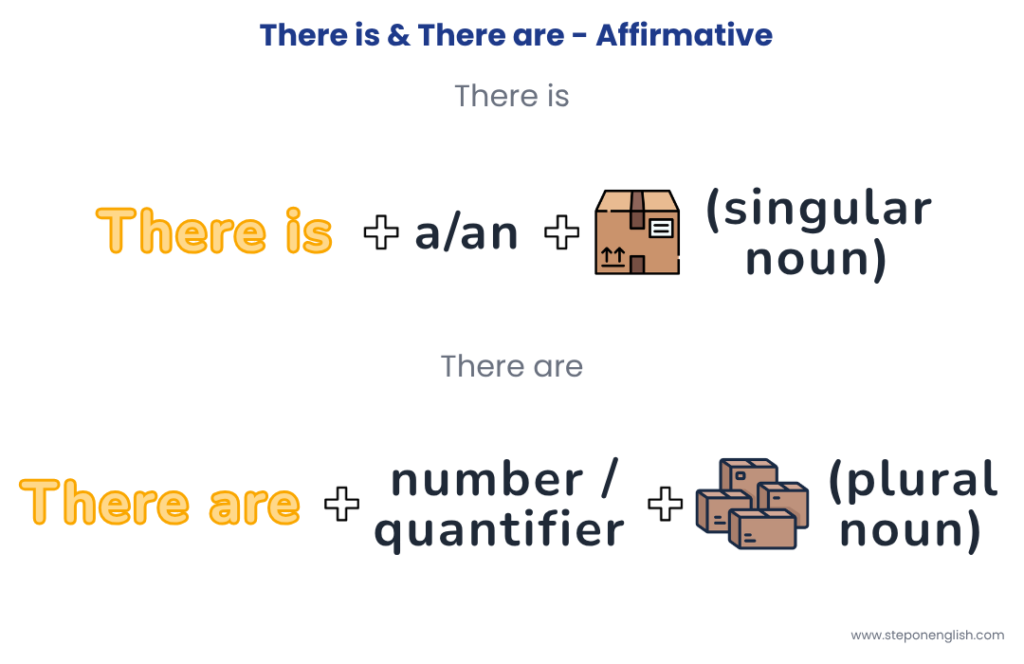
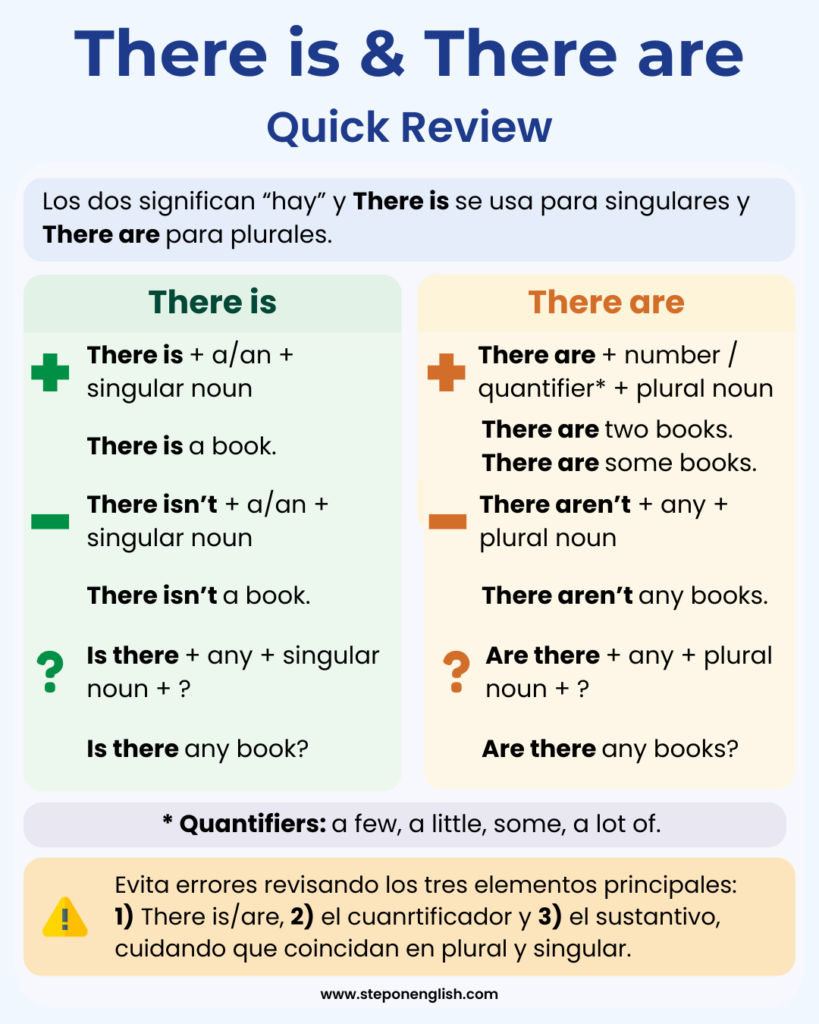
En oraciones afirmativas tenemos dos opciones: is para singular y are para plural. Con singular usamos a/an para indicar uno, y en plural podemos usar cualquier número o cuantificador.
✨ Examples
There is a book on the table.
There is an umbrella in the living room.
There are two cats on that roof.
There are three bedrooms in my house.
💡 Tip
There’re existe como contracción de there are, pero en la práctica casi no se escribe porque es difícil de pronunciar con fluidez. Si la encuentras en un chat o texto informal, ya sabes qué es, pero no es necesario que la uses.
⚠️ Common Errors
Usar a/an con There are:
There are a windows in the classroom. ❌
There are two windows in the classroom. ✅
Recuerda que a/an significa uno o una, por tanto no puede ir con There are porque es para plurales.
No siempre es posible indicar la cantidad exacta de algo: a veces no tiene sentido contarlo, y otras veces simplemente no hay tiempo para hacerlo. En esos casos usas los quantifiers (cuantificadores), palabras que indican cantidades de forma general. Algunos que puedes usar en plural son:
There is some milk.
There is a lot of food.
➖ Forma Negativa
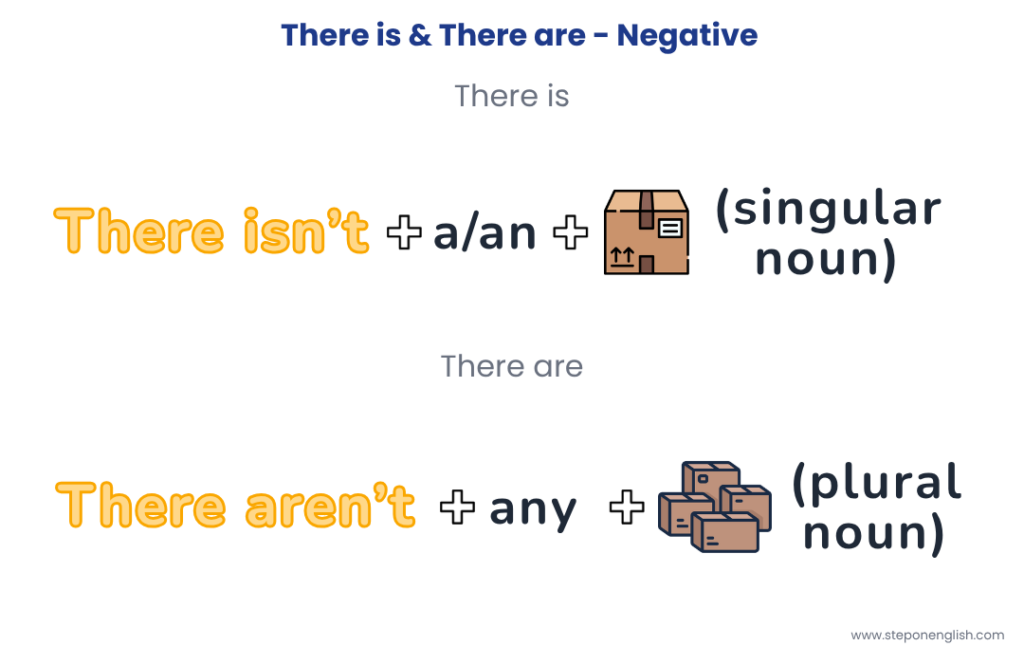
En la forma negativa usamos isn’t y aren’t, y el cuantificador cambia a any, que en este contexto se traduce como “ningún” o “ninguna”.
✨ Examples
There isn’t any bottle of milk in the fridge.
There isn’t any bank in my town.
There aren’t any cars on the avenue.
There aren’t any ATMs in this small town.
⚠️ Common Errors
❌ Traducir any de forma literal en plurales
There aren’t any cars.
❌ No hay ningunos autos. (Suena redundante o artificial)
✅ No hay autos. (Suena natural)
Any en oraciones negativas con plurales no necesita traducirse como “ningunos/ningunas” — esa forma casi no existe en español cotidiano.
❓ Forma Interrogativa
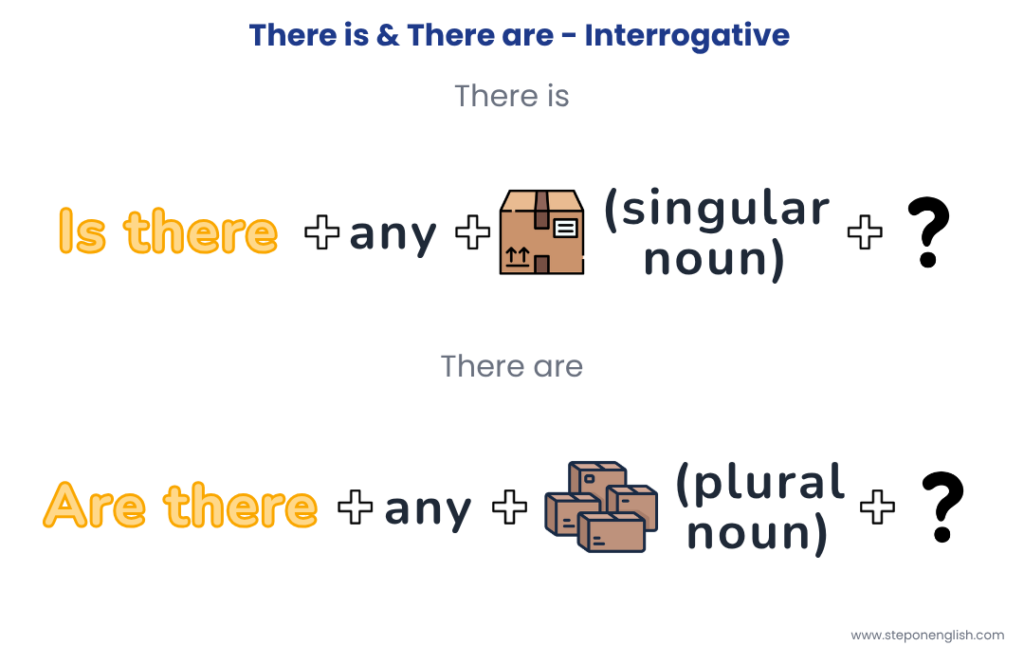
En la forma interrogativa invertimos el orden: el verbo (is/are) va al inicio de la oración, y usamos any como cuantificador. Al final agregamos el signo de interrogación.
✨ Examples
Is there any doctor here?
Is there any museum in the city?
Are there any parks around?
Are there any bathrooms in the auditorium?
💡 En contextos muy específicos, como ofertas o solicitudes corteses, es posible usar some en lugar de any, pero ese uso es menos común y se estudia en un nivel más avanzado.
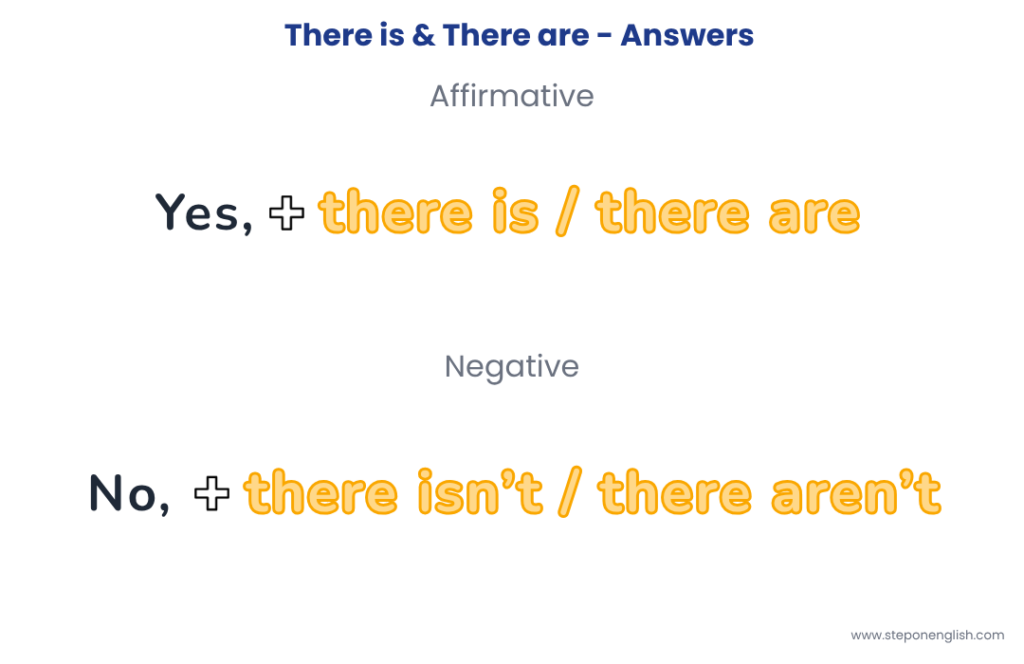
Respuestas con There is & There are
Para responder, usa Yes o No seguido de la estructura correspondiente:
✨ Examples
Is there a bank nearby? Yes, there is.
Are there any bathrooms here? No, there aren’t.
Is there an ATM in the neighborhood? Yes, there is. There’s one near here.
Cómo comprobar una oración con There is / There are.
Cuando escribas oraciones te sugiero que las revises a partir de los tres elementos principales de la oración y que menciono en el primer párrafo: 1) there is/are, 2) el cuantificador y 3) el sustantivo cuidando de que coincidan en plural o singular, observa:
✔️ All elements match.
✔️ All elements match.
The quantifier a does not match the plural noun.
The noun should be plural: books.
Use There are with plural nouns.
De esta forma sencilla puedes verificar que tus oraciones sean correctas y no tengan una discordancia en las cantidades.
⚠️ Common Errors
Confundir there / their / they’re porque se pronuncian igual:
Their some students in the classroom. ❌
There are some students in the classroom. ✅
🧠 Quick Review
💬 The Speaking Lab: There is & There are in Real Life!
Escucha y repite las siguientes oraciones, pon atención en el uso de there.
📝 Práctica:
Personaliza las respuestas con otros lugares o sustantivos y practica con un amigo o compañero.
✔️ Self-Evaluation
- Verifica que tanto entendiste el tema y responde el Quiz de There is & There are.
Comprueba tus conocimientos.
There is / There are
Choose the correct option.

Next Step
Puedes complementar el uso de there is / there are aprendiendo qué son los quantifiers: palabras que ya empezaste a usar en este tema y que te ayudarán a construir oraciones más precisas y naturales.
🗂️ Recursos recomendados
- 📖 Revisa el tema de uso del verb to be.
- 📲 Descarga las infografías Quick Review y Summary de There is and There are.
📚 References
Wilding, A. (2020). Diferencias entre “there is” y “there are”. British Council España. https://www.britishcouncil.es/blog/diferencias-entre-there-is-y-there-are
British Council. (2021). Quantifiers. Learn English British Council. https://learnenglish.britishcouncil.org/es/english-grammar-reference/quantifiers
Swan, M. (2016). Practical English usage (3rd ed., versión 3.53.260) [Aplicación móvil]. https://apps.apple.com/us/app/practical-english-usage/id1383662928